Recently, the first prototype of the HH170 Central Solenoid (CS) magnet successfully underwent 20K current-carrying testing. The HH170 CS magnet R&D project, internally codenamed Weidi Magnet, along with the completed Jingtian Magnet, are both key pre-research projects for the HH170 high-temperature superconducting tokamak magnet system.
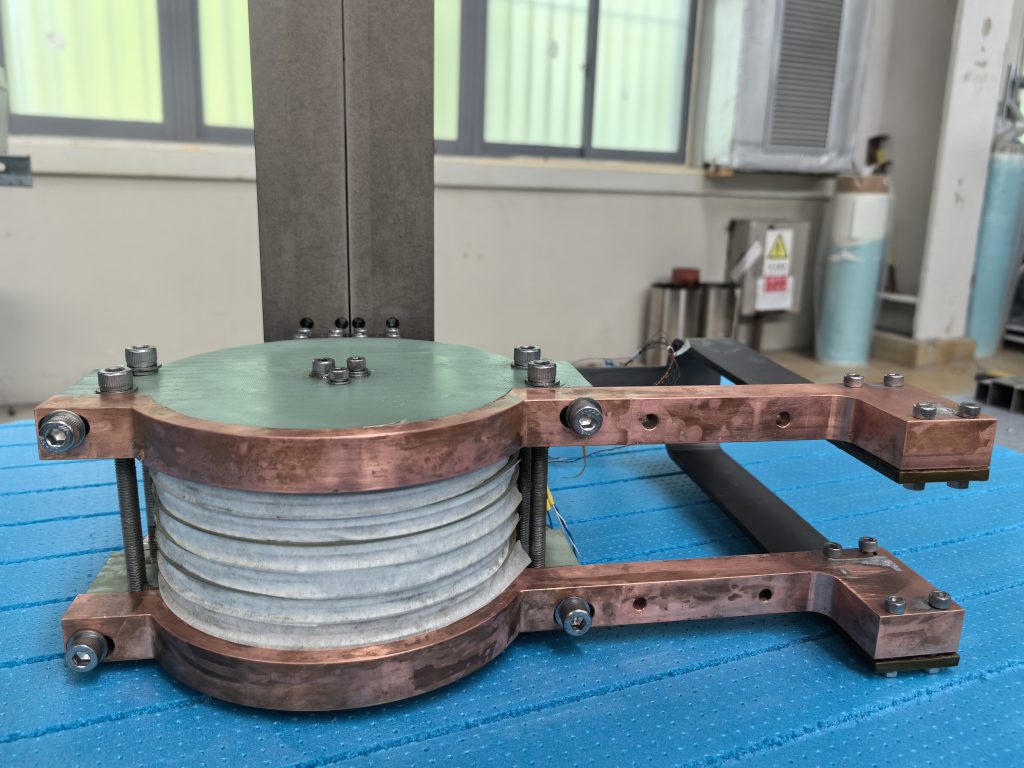
The core function of the Central Solenoid (CS) magnet in a tokamak device is to drive plasma current. The prototype tested this time is the first prototype of the Weidi Magnet, using a high-temperature superconducting multi-tape parallel winding structure and processed through solder impregnation. Unlike the toroidal field (TF) steady-state magnets represented by Jingtian Magnet, the CS magnet operates in an environment with varying current and magnetic fields. One of its core technical challenges is to properly address the heating caused by AC losses under conditions of high magnetic field and large magnetic field change rates.
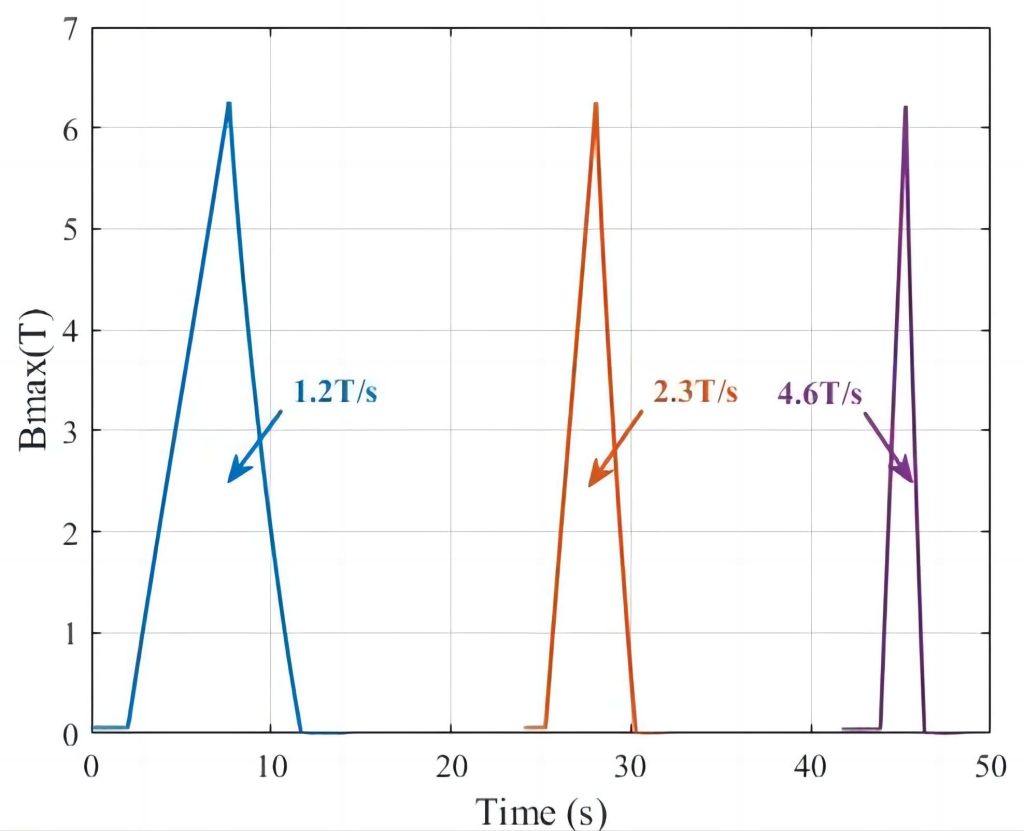
Currently, research on AC losses of high-temperature superconducting CS magnets in the range above 4 Tesla is still very limited. This experiment was conducted in a low-temperature environment of 20K. The magnet achieved a maximum magnetic field of 6.3 Tesla and a maximum magnetic field change rate of 4.6 Tesla per second. In this experiment, the AC loss of the magnet was basically consistent with the predictions of Energy Singularity's CS magnet simulation model, verifying the effectiveness of the simulation model and accumulating valuable data for the design and manufacturing of the formal Weidi Magnet.